Uterine Fibroids: Causes and Symptoms | Aegis Roen HIFU Center




Main menu

Section menu
Page title
is a new treatment that removes uterine fibroids effectively
while being safer for pregnancy and childbirth than surgery.
Page content
that makes up the uterine wall.
Fibroids are very common and affect 40–50% of women over 35. They usually shrink after menopause and new fibroids rarely appear, but fibroids that persist may still be found after menopause.
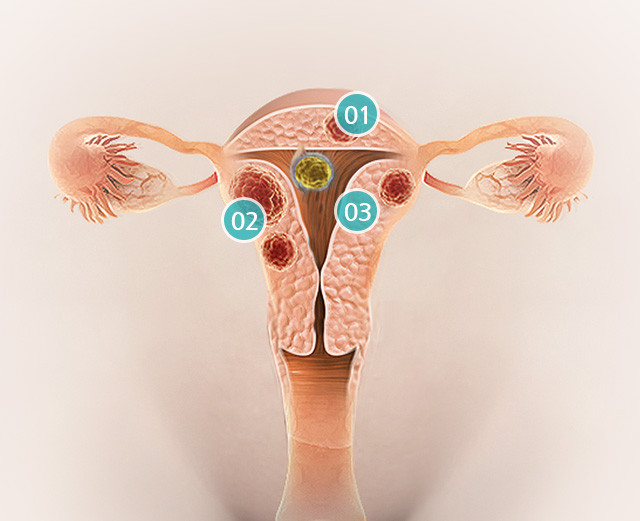
-
01
Intramural fibroid
Grows deep inside the muscle wall of the uterus. It enlarges the uterus and the area of the uterine lining, which makes periods heavier.
-
02
Subserosal fibroid
Grows just under the outer layer covering the uterus. It can hang down and form a stalk.
-
03
Submucosal fibroid
Causes many complications. Even a small one can cause bleeding. It has a higher risk of sarcomatous change, is prone to infection, pus formation and tissue death, and does not respond well to radiation.
increasing in young unmarried women in their 20s? Statistics show that more young women in their 20s and 30s have uterine conditions such as fibroids, adenomyosis and endometriosis. Rates are rising fast in women in their 20s and 30s. Many are not aware of uterine disease, skip regular check-ups, and dismiss severe period pain or back pain as ordinary PMS, missing the right time for treatment.
| 20s | 30s | 40s | 50s | 60s |
|---|---|---|---|---|
| 9,090 women | 56,630 | 144,489 | 77,568 | 12,315 |
There are several possible explanations:
-
Genetics
If someone in your family has fibroids, your risk may be higher.
-
Female hormones
Persistently high levels of the female hormone estrogen are involved in fibroid growth and can lead to fibroids.
-
Irregular eating habits
A Western-style diet high in fat can raise estrogen levels in the body and may lead to fibroids.
-
Stress
A lot of stress can make periods irregular and harm the health of the uterus.
but some women have sudden uterine bleeding, heavy periods, lower belly discomfort or bloating.
-
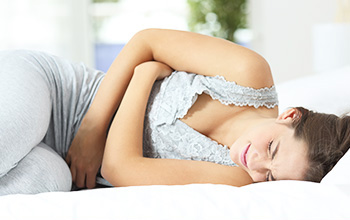 Pain
Pain
Severe period pain, pelvic pressure and pain,
nerves pressed by the enlarged uterus -
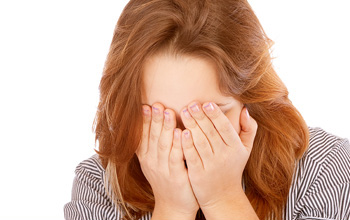 Bleeding
Heavy periods, unexplained bleeding,
anemia from ongoing bleeding -
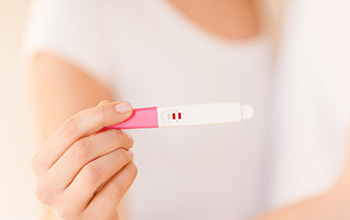 Infertility
Problems with implantation due to bleeding in the uterus, repeated early miscarriage
Many women with fibroids have no symptoms. But about 30–35% of women with fibroids have symptoms, which can vary. Depending on the size, number and location of the fibroids, there may be one symptom or several.
How bloated you feel depends largely on the size and location of the fibroid.
It may also cause back pain. As the fibroid grows it presses on organs around the pelvis, causing bloating, difficulty urinating and constipation.
Heavier periods are common in women with fibroids.
Heavier bleeding and longer, more painful periods are known to be period problems caused by fibroids. Abnormal bleeding is also a common symptom, and any type of fibroid can cause bleeding.
Submucosal fibroids in particular bleed more easily because of surface infection and ulceration, so it is best to have a specialist check-up.
A fibroid in the uterine muscle can disrupt its normal contraction and relaxation, causing period pain you didn't have before or making period pain worse.
Future pregnancy and childbirth
may become impossible. If an unmarried woman's gynecologic ultrasound shows fibroids or another uterine condition, she should decide on treatment with a specialist. Treating it with surgery such as removal of the fibroid or the uterus can make future pregnancy and childbirth impossible.
Surgery that removes the whole uterus because the fibroid is large
Surgery that removes the fibroid with instruments through small cuts instead of a large abdominal incision
Surgery that removes the fibroid itself
Consultation menu
Family sites



Awards
Social media

(Seolleung Station Exit 6, Line 2 / Suin-Bundang Line) Tel: +82-2-542-0100 ┃ Business Registration No. 106-91-90905 Representative: Jae-Seong Lee